

A Tiffany lamp can belong in a period home without making the room feel like a museum. Tiffany lamps for period homes bring colour and crafted detail through shades made from pieces of stained glass, traditionally joined with copper foil. Their roots lie in the late 19th century, yet their glow can sit comfortably alongside both antique and contemporary furnishings.
The appeal is easy to understand: patterned glass softens the light, while botanical and geometric designs bring artistry to everyday rooms. The key is choosing Tiffany lamps for period homes that complement the space’s character rather than compete with it.
This guide explains what Tiffany lighting is and why it suits period interiors. It also explores how antique originals differ from Tiffany-style designs, then shares practical ways to place and coordinate them, from a quiet reading corner to a welcoming dining room.
Key Takeaways
- Match a shade’s scale and colours to the room, then consider how its glass will shape the light.
- Learn why a stamp alone cannot establish whether a lamp is an original, and which other clues help distinguish originals from later designs.
- Use a Tiffany lamp as a considered focal point, balancing its pattern with the home’s existing furnishings and palette.
- Understand why antique values can vary, and explore ceiling, floor, table and wall lights for a period-inspired look.
What Is Tiffany Lighting?
Tiffany lighting uses coloured glass pieces arranged into decorative shades, often with floral, dragonfly or geometric patterns. The style emerged in the late 19th century and became fashionable in the 1890s and early 1900s. Traditionally, makers wrapped each glass piece in thin copper foil, then joined the pieces to create a flowing design. The finished shade gives a room both patterned colour and a gentle, filtered glow.
Styles range from nature-inspired designs to orderly geometric patterns. Amber, green and topaz glass can bring warmth to a darker interior, while blue or pink details offer a cooler accent. A floral shade might suit botanical wallpaper; a dragonfly design can echo the curves of an antique mirror or carved furniture. Let the lamp take centre stage, then repeat one or two of its colours in cushions, ceramics or a rug.
Scale matters. A broad shade can feel at ease above a substantial dining table but may overwhelm a narrow side table. A smaller table lamp can add colour to a writing desk without obscuring books or other objects. In a room with high ceilings, a pendant can draw the eye upwards; in a compact room, a table or wall light keeps the ceiling line visually open. Consider the shade’s width, the furniture beneath it and the surrounding space together.
For a soft, painterly glow, choose a warm LED bulb rated at 2700K, particularly with amber or topaz glass. Check that the bulb’s base and shape suit the fitting, and follow the fitting’s stated bulb requirements. The glass affects how the light appears, so a richly coloured shade may create a cosier pool than a pale design. In a period interior, balance that glow with existing materials such as timber, plaster and patterned textiles.
Choosing a shade that picks up colours already in the room helps it feel at home. In a walnut-furnished study, for example, amber and green glass can echo the wood’s warmth, while a blue detail might connect with nearby upholstery. Tiffany lamps for period homes work best when their patterns have space to be noticed, rather than competing with every surface.
Original lamps and replica designs
Original Tiffany lamps were made by Tiffany Studios, while later designs drew on their stained-glass style. Understanding that distinction helps you appreciate the history and choose a lamp that suits your interior design.
Art Nouveau, Art Deco and geometric designs
Art Nouveau Tiffany designs favour flowing lines and natural forms, including flowers, leaves and dragonflies. Their intricate patterns bring movement and botanical colour to a room. Art Deco designs, by contrast, tend towards structured shapes and cleaner lines. Geometric patterns can feel especially at home with angular furniture and restrained decoration. A lamp’s pattern can echo details already in a period interior or provide a deliberate contrast.
UK prices for antique Tiffany lamps
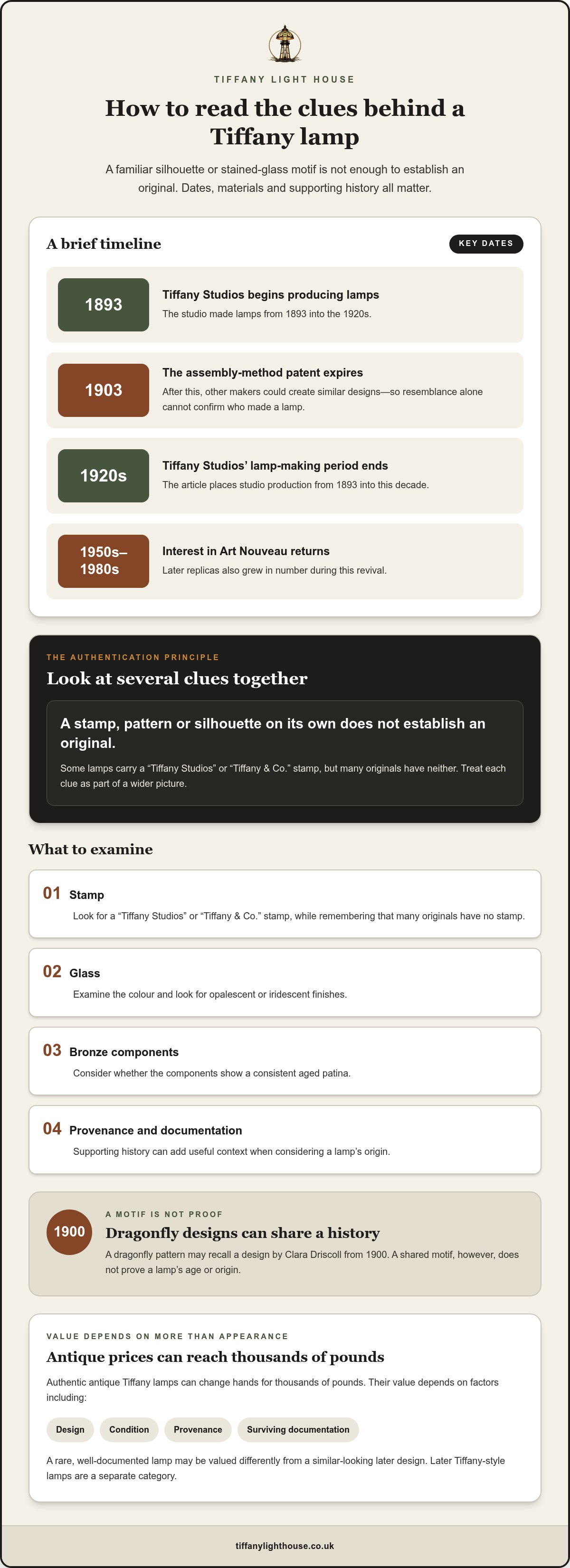
Authentic antique Tiffany lamps can change hands for thousands of pounds. Their value depends on factors such as design, condition, provenance and surviving documentation. A rare, well-documented lamp may be valued differently from a similar-looking later design. This distinction helps set expectations: an antique’s price reflects its history and collectability, not simply its stained-glass appearance. Later Tiffany-style lamps are a separate category.
Clues to original and replica designs
Tiffany Studios produced lamps from 1893 into the 1920s. After the assembly-method patent expired in 1903, other makers could create similar designs. Later replicas also grew in number as interest in Art Nouveau returned between the 1950s and 1980s. So a familiar silhouette or floral shade alone doesn’t establish an original’s maker.
Look at several clues together. Some lamps carry a “Tiffany Studios” or “Tiffany & Co.” stamp, but many originals have neither. Examine the glass for vibrant colour and opalescent or iridescent finishes, then consider whether the bronze components show a consistent aged patina. Provenance and documentation can add useful context. A dragonfly design, for example, may recall a pattern designed by Clara Driscoll in 1900, but a shared motif doesn’t prove the lamp’s age or origin.
Styling Tiffany lamps in period homes
Begin with the room’s architecture, then give stained glass one clear role. In a Gothic or Medieval-style interior, one or two Tiffany lights can add colour without crowding carved wood, stonework or patterned textiles. A single lamp on a side table creates a quieter accent; a pendant above a dining table makes the glass part of the room’s main composition. Aim for balance, not a display of matching pieces.
In a dining room, a Tiffany chandelier can become a focal point against deeply painted walls. Keep surrounding furnishings comparatively simple so the shade’s pattern and craftsmanship remain visible. For a smaller accent, place a mosaic table lamp on a walnut sideboard. It can add colour without serving as the room’s primary lighting, while the polished wood gives the glass a calm, grounded setting.
Botanical shades bring softer lines to rooms with natural materials. Pair leaf or floral motifs with rattan, clay and reclaimed wood for an interior that feels connected to the garden. A pendant can sit above a kitchen island or dining table, while a vine-patterned fitting can welcome guests in an entryway. Carry one colour from the shade into a cushion, rug or ceramic piece to link the details.
In a more eclectic room, repeat selected shade colours through cushions, ceramics or wall art. Floral wallpaper that echoes the glass motif can create a considered relationship, but avoid repeating every pattern. Contemporary furniture and neutral tones offer a useful contrast, keeping Tiffany lamps for period homes from feeling overly traditional. If using several lamps, choose one shared feature, such as colour, shape or motif. That thread gives varied designs a sense of movement and cohesion.
How much do authentic antique Tiffany lamps cost in the UK?
Authentic antique Tiffany lamps can change hands for thousands of pounds. There is no single value that suits every lamp: price reflects its design, condition, provenance and documentation. A rare, well-preserved shade with a clear history may command more than a comparable design with damage or uncertain origins. The maker’s name alone doesn’t determine the price.
Design rarity matters. A sought-after floral pattern, such as a magnolia shade, differs from a more familiar botanical or geometric design. Scale and complexity also shape appeal. A large floor lamp with an elaborate shade is not directly comparable with a smaller table lamp. Collectors also consider how well the glass colours, bronze components and original construction have survived.
Condition deserves close attention. Look for cracks, replacements, repairs and signs that the shade or base has been altered. Consistent ageing across the bronze components can support a sense of coherence, while mismatched finishes may warrant closer scrutiny. Provenance and surviving paperwork add context, but a stamp should not be treated as sole proof of authenticity. Some original lamps have no Tiffany mark.
Keep antique values separate from the cost of a later Tiffany-style design. Both may use stained glass and botanical motifs, but an antique’s maker, age, rarity and documented history contribute to its collectable value. A reproduction can offer visual character without the same provenance. For a period home, decide whether your priority is an authenticated historical object or the colour and character of crafted glass for everyday use.
If the aim is a stained-glass look rather than antique provenance, explore Tiffany-style lighting designs for your home.
Tiffany Light House: Tiffany Ceiling Lights
Tiffany Light House offers Tiffany Ceiling Lights for adding stained-glass colour overhead, alongside floor, table and wall lights for layered period-home lighting. Each shade is made by hand from individually cut and arranged glass, using the traditional copper-foil technique. The collection can help you carry a chosen motif or colour through different parts of a room, from a ceiling focal point to a reading-corner table lamp.
If you’re choosing between a ceiling fitting and a smaller accent light, consider the room’s proportions and where you want the colour to draw the eye. UK delivery is free, and returns are free within 30 days.
Visit Tiffany Light House to explore the lighting, or get in touch with the team.
Choose the light that feels at home
Let the room guide your next choice. Notice where you pause to read, gather or unwind, then consider how a stained-glass detail could make that corner feel more personal. Tiffany lamps for period homes needn’t follow a fixed formula. A single fitting can sit quietly within a room or become the detail that draws the eye and gives the space fresh character.
For a considered starting point, explore Tiffany Light House’s Tiffany Ceiling Lights, Tiffany Floor Lamps and Tiffany Table Lamps. Each brings a different presence, from overhead colour to a gentle pool of light beside a favourite chair. Choose the position that suits your routine, and let the lamp’s pattern complement the character you’ve already made your own.
Explore the collection at Tiffany Light House, or contact Tiffany Light House to begin choosing a fitting for your home. A thoughtful light can make an old room feel newly yours.
Frequently Asked Questions
How can you tell if a Tiffany lamp is real?
Look for several clues together rather than relying on one mark. A “Tiffany Studios” stamp can be useful, but its absence doesn’t rule out an original, and a stamp alone isn’t proof. Compare the shade, base, glass and overall condition, then consider provenance and paperwork. For a valuable purchase, an antique appraiser can assess the evidence as a whole.
Where should I place a Tiffany lamp in my home?
Choose a position where the shade can be seen without obstructing everyday movement. A table lamp can bring colour to a bedroom chest or hallway console; a wall light can add detail beside a doorway. Keep the fitting in proportion to nearby furniture, and leave enough clear surface around a table lamp to appreciate its patterned shade.
What defines an authentic Tiffany lamp and how can it be identified?
Authenticity depends on whether a lamp is an original or a later design borrowing the style. Identification involves considering the design, materials, workmanship, condition and ownership history together. A familiar dragonfly motif, for example, identifies a design theme, not necessarily the maker. Documentation and expert appraisal can help establish whether the evidence supports an original attribution.
Which Tiffany lamp styles suit Victorian and Edwardian period homes?
Floral and dragonfly shades can complement the carved details and botanical patterns found in Victorian interiors. In an Edwardian room with simpler furnishings, a restrained floral or geometric design can add colour without dominating the space. Treat these as styling pairings, not strict historical rules. Repeating a shade colour in a rug or upholstery can make either choice feel connected.
How do I choose the right Tiffany lamp size and placement for a period room?
Measure the table, console or available ceiling space before choosing a fitting. A broad shade needs room around it, while a narrower surface usually suits a more compact lamp. Consider seated and standing sight lines too: place a table lamp where its shade won’t block a mirror or artwork. In a high-ceilinged room, an overhead fitting can draw attention upwards.
How can I distinguish genuine Tiffany glass from modern imitations?
Examine the glass in both daylight and lamplight. Vibrant colours and opalescent or iridescent finishes are useful details to assess, but appearance alone cannot establish age or maker. The traditional copper-foil assembly method is also used in Tiffany-style designs, so it isn’t proof of an original. Consider the complete lamp, its condition and its documented history together.